
Free ebook Play 01 of 29 · SalesLeader360 Marketing Playbook Series
The contractor's Marketing Blueprint.More jobs. A plan you control.
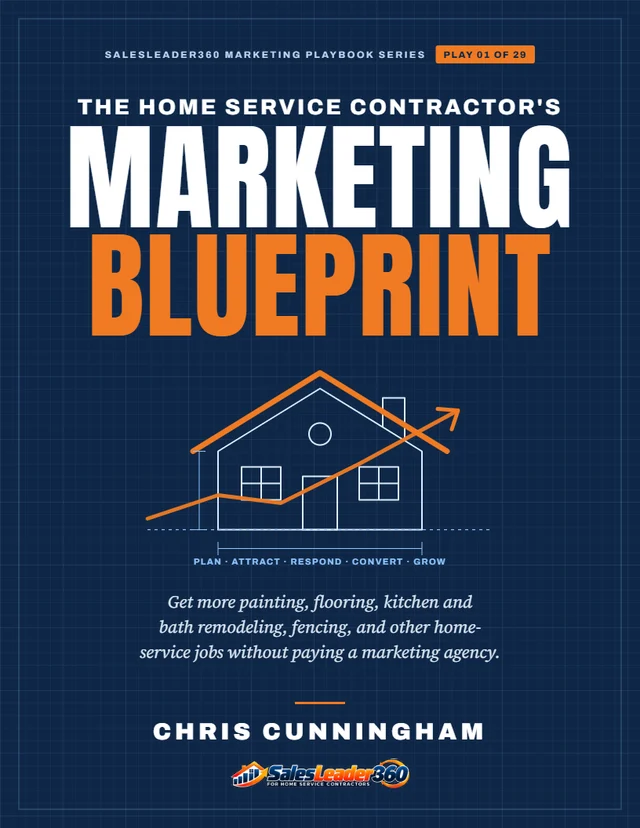
A practical plan to get more painting, flooring, remodeling and other home-service jobs — without paying a marketing agency.
- Six principles behind profitable contractor marketing
- How to choose between spending money and spending time
- Speed-to-lead and the marketing math that decides what to keep
- A first-30-days action plan you can start Monday
- Plan
- Attract
- Respond
- Convert
- Grow
00Why contractors need a blueprint, not another agency
Most independent contractors have been sold marketing as a monthly retainer: pay someone else, hope the phone rings, and accept a report full of impressions you cannot deposit. When it stops working, you are left with nothing you own.
This Blueprint takes the opposite position. Marketing for a home-service business is a system with five stages — plan, attract, respond, convert and grow — and the owner should understand and control every one of them. You can still hire help. You just stop handing over the keys.
Written by SalesLeader360 founder Chris Cunningham, it draws on more than 30 years in sales leadership, marketing, business process and software. It is designed to be useful on its own, starting with three things you can put to work this month.
01Six principles of profitable contractor marketing
Every tactic in the series is tested against these. If a channel violates them, it usually loses money.
- P1
Marketing is an investment
Plan your marketing investment deliberately, run it consistently, and measure whether it produces profitable customers.
- P2
Every strategy costs time, money, or both
Choose strategies that fit the resources you have now. A low-cash approach still needs your time, and paid channels still need oversight.
- P3
The goal is profitable customers, not leads
A cheap lead that never answers is not a bargain. Judge channels by the profitable jobs they produce, not just the number of inquiries.
- P4
Speed wins
Plug the holes in call answering and lead response before spending more to generate inquiries you cannot follow up with.
- P5
Consistency beats intensity
Choose a manageable set of activities you can repeat every week, rather than starting ten tactics and abandoning them.
- P6
What gets measured gets improved
Use a simple weekly scoreboard to connect your marketing investment to estimates, sold jobs and profit.
02Your budget is time or money. Choose on purpose.
Spending time
Reviews, your Google Business Profile, past-customer outreach, referral partners, yard signs and neighborhood follow-up. Low cash cost, compounding results, but it only works if you schedule it like a job.
Best when cash is tight and your calendar has gaps.
Spending money
Search ads, social ads and paid lead platforms. Faster volume, but every dollar is rented and every lead goes cold quickly if nobody answers.
Best when your response and follow-up are already tight.
The Blueprint shows how to set a starting budget as a share of the revenue you want, how to split it between owned and rented channels, and when to stop a channel instead of hoping it improves.
03Speed to lead decides who gets the job
A homeowner who fills out a form usually contacts more than one contractor. The first business to answer with a clear next step tends to get the estimate appointment; the rest get voicemail tag.
The Blueprint covers how to answer calls you would otherwise miss, what to say in the first reply, and how to build a follow-up rhythm so an unanswered estimate gets several written touches instead of one.
04Marketing math you can do on a napkin
Connect your marketing investment to actual jobs. The Blueprint explains the numbers with practical examples and a weekly scoreboard.
- Cost per lead
- Channel spend ÷ leads received
- Cost per job
- Channel spend ÷ jobs signed
- Return on spend
- Gross profit from those jobs ÷ channel spend
An example in your own numbers: if a channel costs a set amount per month and produces a handful of signed jobs, divide and compare that cost per job to your average gross profit per job. If the cost per job is close to the profit, the channel is keeping you busy, not growing you.
05Your first 30 days
- Week 1
Stop losing leads
Call your business, test your website form, set a response standard and put open opportunities into a follow-up process.
- Week 2
Build visibility and trust
Make your business easy to find and trust, starting with your local presence and the proof homeowners look for.
- Week 3
Choose what fits
Follow the path for your available time and money: review requests, referral groundwork, or planning a measured paid-channel test.
- Week 4
Put it into practice
Build referral relationships, reactivate past customers or launch one measured paid channel, according to your situation.
06One play of 29
The Marketing Blueprint is Play 01, the foundation of the SalesLeader360 Marketing Playbook Series. Later plays go deeper on each stage.
- 01
The Marketing Blueprint This ebook
Plan, attract, respond, convert, grow: the foundation every later play builds on.
- PLAN
Build your foundation
Budgeting, understanding your market, choosing your customer and making your offer clear.
- ATTRACT
Choose your channels
Local visibility, paid advertising, referral relationships and other ways homeowners find you.
- CONVERT
Keep more opportunities
Fast lead response, trust, consistent follow-up and measuring profitable jobs.
- GROW
Put the plan to work
Preview the specialist plays and their quick wins, then choose what fits your business.
Take control of your marketing this month.
Get the free PDF now. Forward it to your partner, your office manager or the contractor friend who keeps paying an agency.
Related: SalesLeader360 business tools · Why Facebook leads don't convert · Why Google Ads leads don't convert · Business insights · About SalesLeader360